JEE Main 2025 January Physics: Oscillations (SHM) – Previous Year Questions
All 5 questions asked from Oscillations (SHM) in JEE Main 2025 January Physics (22, 23, 24, 28 and 29 January, all shifts). This chapter is about 2.0% of the 250 Physics questions in the session: 5 single-correct (MCQ) and 0 numerical-value questions. Select an answer to attempt each question, and open “View solution” under it.
5questions
5MCQ
0numerical
2.0%of Physics paper
Topics asked in this chapter
Simple Harmonic Motion – 5 questions
Simple Harmonic Motion
Q123 Jan 2025 · Shift 1MCQ
A light hollow cube of side length 10 cm and mass 10 g, is floating in water. It is pushed down and released to execute simple harmonic oscillations. The time period of oscillations is $y\pi\times10^{-2}$ s, where the value of $y$ is (Acceleration due to gravity, $g = 10\ \mathrm{m/s^2}$, density of water $= 10^3\ \mathrm{kg/m^3}$)
A
4
B
6
C
1
D
2
Q224 Jan 2025 · Shift 1MCQ
A particle is executing simple harmonic motion with time period 2 s and amplitude 1 cm. If $D$ and $d$ are the total distance and displacement covered by the particle in 12.5 s, then $\frac{D}{d}$ is
A
$\frac{16}{5}$
B
10
C
$\frac{15}{4}$
D
25
Q324 Jan 2025 · Shift 2MCQ
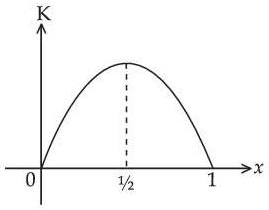
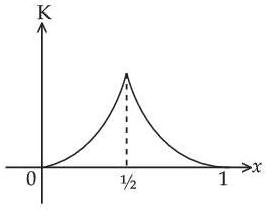
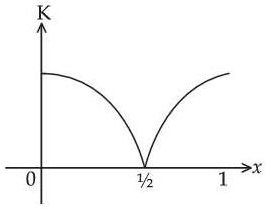
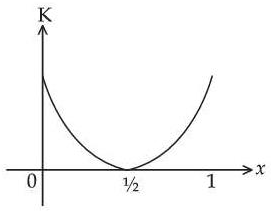
A particle oscillates along the $x$-axis according to the law, $x(t) = x_0\sin^2\left(\frac{t}{2}\right)$ where $x_0 = 1$ m. The kinetic energy (K) of the particle as a function of $x$ is correctly represented by the graph
A
B
C
D
Q428 Jan 2025 · Shift 2MCQ
Given below are two statements. One is labelled as Assertion (A) and the other is labelled as Reason (R).
Assertion (A) : Knowing initial position $x_0$ and initial momentum $p_0$ is enough to determine the position and momentum at any time $t$ for a simple harmonic motion with a given angular frequency $\omega$.
Reason (R) : The amplitude and phase can be expressed in terms of $x_0$ and $p_0$.
In the light of the above statements, choose the correct answer from the options given below :
A
Both (A) and (R) are true but (R) is NOT the correct explanation of (A)
B
Both (A) and (R) are true and (R) is the correct explanation of (A)
C
(A) is false but (R) is true
D
(A) is true but (R) is false
Q529 Jan 2025 · Shift 2MCQ
Two bodies A and B of equal mass are suspended from two massless springs of spring constant $k_1$ and $k_2$, respectively. If the bodies oscillate vertically such that their amplitudes are equal, the ratio of the maximum velocity of A to the maximum velocity of B is