JEE Main 2025 January Physics: Kinetic Theory of Gases – Previous Year Questions
All 5 questions asked from Kinetic Theory of Gases in JEE Main 2025 January Physics (22, 23, 24, 28 and 29 January, all shifts). This chapter is about 2.0% of the 250 Physics questions in the session: 4 single-correct (MCQ) and 1 numerical-value questions. Select an answer to attempt each question, and open “View solution” under it.
5questions
4MCQ
1numerical
2.0%of Physics paper
Topics asked in this chapter
Kinetic Theory of Gases – 4 questions
Specific Heats & Degrees of Freedom – 1 question
Kinetic Theory of Gases
Q128 Jan 2025 · Shift 1MCQ
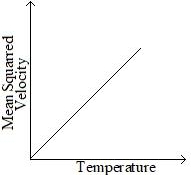
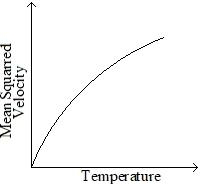
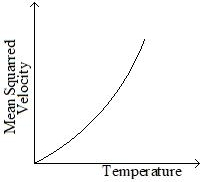
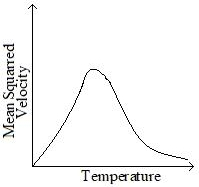
For a particular ideal gas which of the following graphs represents the variation of mean squared velocity of the gas molecules with temperature?
A
B
C
D
Q228 Jan 2025 · Shift 2MCQ
The ratio of vapour densities of two gases at the same temperature is $\frac{4}{25}$, then the ratio of r.m.s. velocities will be :
A
$\frac{25}{4}$
B
$\frac{5}{2}$
C
$\frac{4}{25}$
D
$\frac{2}{5}$
Q328 Jan 2025 · Shift 2MCQ
The kinetic energy of translation of the molecules in 50 g of $\mathrm{CO_{2}}$ gas at $17^\circ$C is
A
3986.3 J
B
3582.7 J
C
4102.8 J
D
4205.5 J
Q429 Jan 2025 · Shift 1Numerical
A container of fixed volume contains a gas at $27^\circ$C. To double the pressure of the gas, the temperature of gas should be raised to $^\circ$C.
Specific Heats & Degrees of Freedom
Q522 Jan 2025 · Shift 2MCQ
For a diatomic gas, if $\gamma_1 = \left(\frac{C_p}{C_v}\right)$ for rigid molecules and $\gamma_2 = \left(\frac{C_p}{C_v}\right)$ for another diatomic molecules, but also having vibrational modes. Then, which one of the following options is correct ? ($C_p$ and $C_v$ are specific heats of the gas at constant pressure and volume)